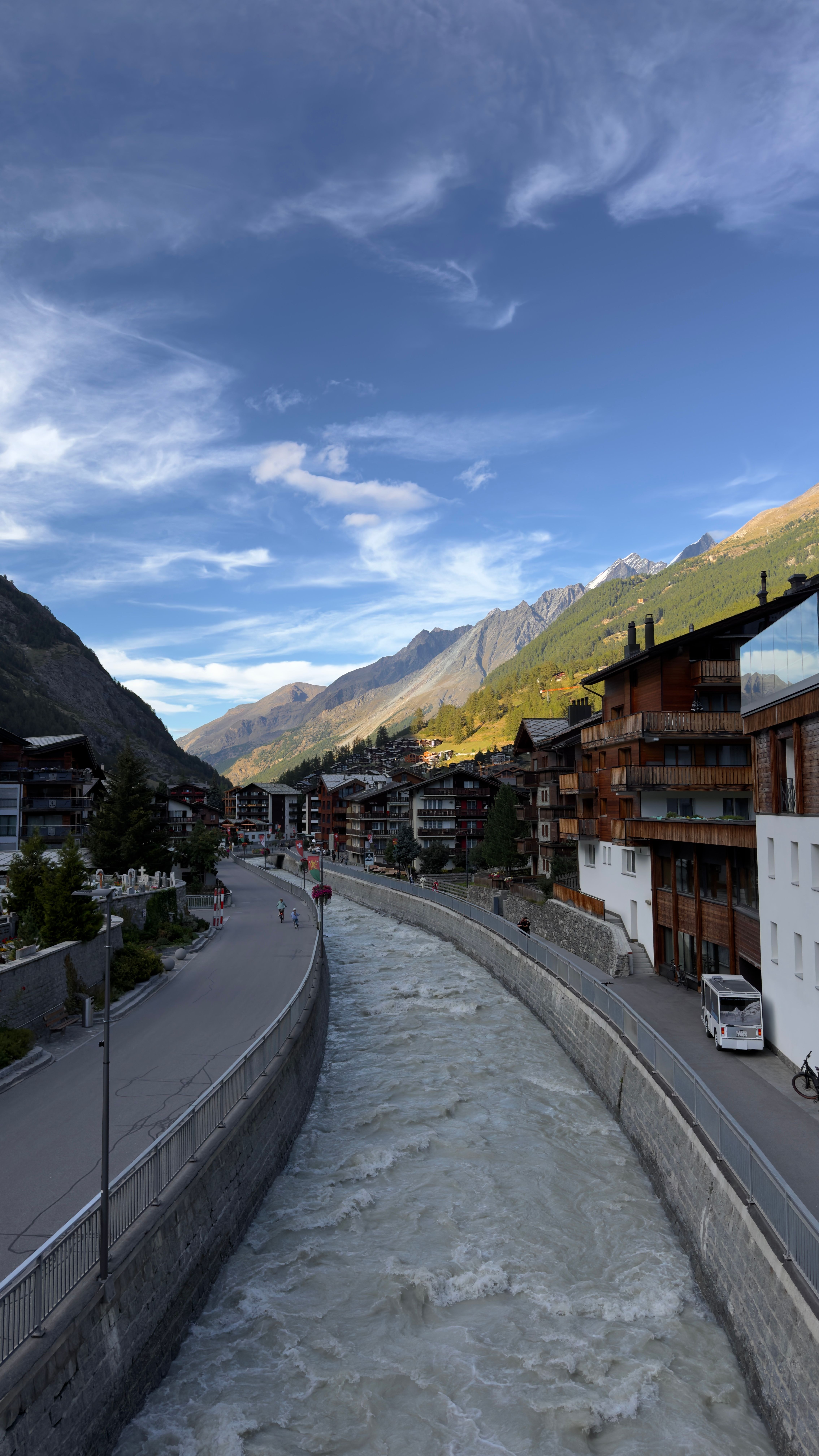
An Alpine summer. Engadin and Zermatt, Switzerland and Chamonix, France.
An Alpine Summer: Engadin and Zermatt, Switzerland, and Chamonix, France
There are places so stunning that you feel it’s almost unfair to the rest of the world. The Swiss Alps easily earn that sentiment, and a recent trip only reinforced why they rank high on many travelers’ lists. Having already explored Interlaken, Lucerne, Geneva, and the Rhine Falls, we hoped for a better glimpse of the Matterhorn after a previous visit where the peak stayed hidden behind clouds.
The plan was simple: fly into Zurich, ride the train to St. Moritz for a few days, continue to Zermatt for another few days in hopes of catching clearer views of the iconic peak, then finish with Chamonix before flying home from Geneva. We were a party of five, with one member facing mobility limitations, a couple of younger travelers keen on social media, and a desire to balance scenic hikes with accessible activities.
Budget notes and planning
– Switzerland remains beautifully expensive. St. Moritz, in particular, adds about 25 percent to the standard Swiss price.
– Train passes can offer substantial value. We purchased four Swiss Travel Day Passes in advance (54 CHF each), which covered most standard trains on the Bernina line and the Glacier Express, with only seat reservations needing separate payment.
– The Engadin valley offers a regional pass (Engadin Pass) for stays longer than two nights; a small refundable deposit (10 CHF) unlocks free cable cars and complimentary local buses and trains in the upper Engadin. For travelers planning to explore the region, three nights is a sweet spot to maximize the pass benefits.
Engadin and Pontresina as a base
Pontresina became our base for its charm, affordability relative to St. Moritz, and excellent connections. The Muller Hotel stood out for its welcoming staff and convenient location. The short walk to the Surovas Bernina line stop and the easy transfer from Samedan by taxi made day trips efficient.
Bernina Express and the open-window alternative
A frequent debate for rail enthusiasts is whether to pay extra for the Bernina Express. In practice, standard SBB services along the Bernina line offer expansive views through large, operable windows that can be opened to reduce glare. It’s feasible to stop at several highlights—Ospizio Bernina, Lago Bianco, Alp Grum, Miralago, and Lago Poschiavo—without committing to the longer scenic train. Shorter hikes along the route can be deeply rewarding, and splitting the journey into two days can ease travel, reducing the need for long stints in Tirano and leaving room for a relaxed pizza break and the next train.
Cable cars to savor
Among the many cable cars in the Engadin, Muottas Muragl, Diavolezza, and Corvatsch consistently delivered standout experiences. The region’s lakes—Lago di Silvaplana (a constant wind-surfing backdrop), Lago Bianco, and Lago di Miralago—were as photogenic as promised, with Lago Poschiavo earning a special mention for its striking color.
St. Moritz reconsidered
While the town’s scenery is undeniable, some places can feel more about the spectacle than the substance. A visit to a highly photographed chocolate/coffee shop in St. Moritz highlighted the balance between desire for iconic experiences and the reality of price versus value.
Glacier Express and Bernina Express
On this trip, the Glacier Express presented a mixed experience. The main advantage was smoother navigation with fewer platform changes while traveling with luggage. However, the Bernina Express provides notable value on a per-mile basis, and in our view, the GE’s vistas sometimes felt repetitive. The Andermatt stretch, however, was particularly memorable. A small but meaningful tip: the Glacier Express does offer windows you can open in some cars, and staff are helpful in showing how to operate the window mechanisms for photographs.
Zermatt and the Matterhorn
The moment the weather cooperated, the Matterhorn revealed itself in a clear blue sky with wisps of clouds—an unforgettable sight despite having seen countless photographs of the peak. Snow cover was limited, but the experience remained magical.
Photo opportunities and practical tips
– Sunrise: For a low-effort, high-reward shot, start near Riflesee early. A short post-dawn stroll to the bridge by the church offers a striking view of the Matterhorn catching alpenglow.
– Sunset: A roughly 15-minute walk and a climb to Murini Viewpoint yield a dramatic panorama for late-day photography.
– Gornergrat and surrounding viewpoints: While Gornergrat’s final stop doesn’t fully reveal the full ridge, Rotenboden and Riffelberg offer more complete perspectives. A stop at Riffelberg for a beer with the Matterhorn framed by pines remains a personal favorite.
– Early trains: The first lifts and trains tend to be less crowded; arriving early helps you catch the best light and minimize queues.
– Gear and shopping: Zermatt is well-trodden and pricey—do not expect bargains on outdoor gear. A note on local cuisine: the town is popular with visitors from South Asia, and many dining options are superb, including opportunities to sample local and Indian-inspired fare.
Chamonix and Mont Blanc perspectives
The journey from Zermatt to Chamonix was straightforward with a day pass covering most local travel; a small extra fare was needed for post- Vallorcine to Chamonix Sud connections. Chamonix is a walkable town with a distinct, less expensive ambiance compared to Swiss towns. In the mountains, the Mont Blanc massif offers a spectacular backdrop, though weather can often be fickle—often hiding Mont Blanc in clouds or requiring early planning for cable car slots.
A few practical reminders
– Montenvers Glacier and the ice cave deliver a poignant reminder of a glacier’s decline; the experience is sobering and worthwhile.
– The Brevent cable car provides sweeping views of the Mont Blanc massif and the town below.
– The local transit network, including the Alpy Transfer bus back to Geneva, can simplify multi-country itineraries in the Alps.
Overall reflections
The trip left us with a lasting impression of the Alpine regions’ beauty, hospitality, and efficiency. The SBB app proved to be an invaluable companion for planning and day-of-travel tasks, and the majority of people we encountered were kind and helpful. If there’s a note of caution, it’s to be prepared for weather variability and to balance expectation with the realities of peak-season travel in popular destinations like Zermatt and Chamonix.
Whether future trips bring us back to Switzerland’s Engadin and Zermatt or onward to new Alpine vistas, the memory of clear skies over the Matterhorn remains a powerful lure.